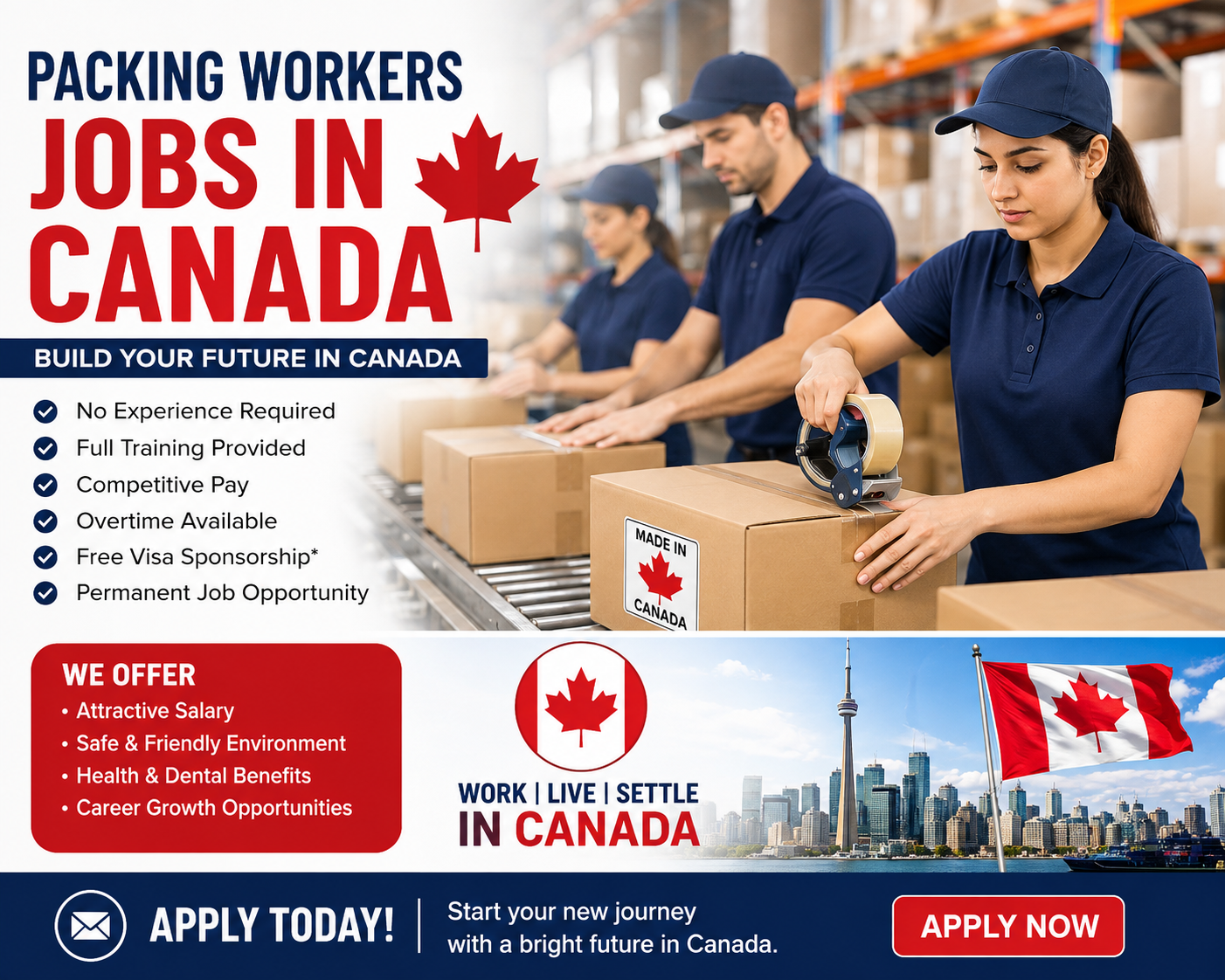
Canada’s warehouses, food processing plants, and e-commerce fulfillment centers are hiring steadily in 2026, and packing worker jobs in Canada remain one of the most accessible entry points into the country’s labour market. Whether you’re a recent arrival looking for your first Canadian job, a student wanting flexible shift work, or someone exploring a career change into logistics, packing roles offer decent pay, on-the-job training, and, in many cases, a pathway to more advanced warehouse or production positions.
This guide breaks down what packing workers actually do, how much they earn across Canadian provinces, what employers expect, and exactly how to apply — using current wage data from Canada’s official Job Bank.
Last updated: August 2026
What Does a Packing Worker Do in Canada?
A packing worker (also listed under job titles like packager, packaging labourer, or machine packager) prepares finished products for storage, shipment, or sale. Day-to-day duties typically include:
- Sorting, weighing, and inspecting products for quality before packaging
- Loading items into boxes, bags, containers, or onto pallets by hand or using packaging machinery
- Labeling, sealing, and stacking packaged goods
- Operating basic equipment such as sealers, wrapping machines, or conveyor belts
- Keeping accurate counts and reporting damaged or defective stock
- Following food safety or workplace safety protocols, especially in meat, seafood, or produce plants
Under Canada’s National Occupational Classification (NOC) system, packing-related work generally falls under NOC 95109 (Labourers in the packaging sector), with meat and food-specific packing roles classified separately under NOC 95106 (Labourers in food and beverage processing).
Types of Packing Jobs in Canada
Not all packing jobs look the same. Here are the most common categories you’ll find on job boards.
Warehouse and E-Commerce Packers
These roles involve picking items from shelves and packing online orders for shipment. Amazon, Walmart, and other logistics companies are major employers in this category, particularly around Toronto, Vancouver, and Calgary.
Food and Meat Processing Packers
Meat-packing plants, poultry processors, and seafood facilities across provinces like Alberta, Ontario, and Quebec regularly hire packing labourers. These jobs often involve cold environments and stricter hygiene requirements.
Fruit and Vegetable Packing
Seasonal agricultural packing jobs are common in British Columbia’s Okanagan Valley, Ontario’s Niagara region, and parts of Quebec, especially during harvest months.
Machine Packagers
Larger manufacturing plants use automated packaging lines, and machine packagers monitor and operate this equipment, troubleshoot jams, and ensure consistent output.
Average Salary of Packing Workers in Canada (2026)
According to Canada’s official Job Bank wage data (updated November 2025), machine packagers earn the following hourly wages nationally and by province:
| Location | Low ($/hr) | Median ($/hr) | High ($/hr) |
|---|---|---|---|
| Canada (national) | 16.50 | 20.00 | 25.40 |
| Alberta | 16.24 | 20.70 | 27.00 |
| British Columbia | 18.25 | 20.25 | 30.00 |
| Ontario | 17.60 | 19.89 | 25.00 |
| Quebec | 16.60 | 20.00 | 25.81 |
| Saskatchewan | 15.35 | 20.00 | 27.00 |
| Manitoba | 16.00 | 18.64 | 23.99 |
| Nova Scotia | 16.75 | 18.44 | 25.00 |
| New Brunswick | 15.90 | 18.00 | 22.35 |
People working as a machine packager in Canada usually earn between $16.50 and $25.40 per hour, based on wage data covering 2023–2024. Around 68.5% of workers in this occupation receive at least one non-wage benefit, such as extended health coverage, paid leave, or CPP/EI contributions.
Separately, salary aggregator data suggests the average annual pay for a general “packer” role in Canada sits close to the high-$20,000s to low-$30,000s range, with entry-level positions on the lower end and experienced workers in provinces like New Brunswick and Saskatchewan trending higher.
[INTERNAL LINK: See our full guide to warehouse jobs in Canada for a broader pay comparison]
Requirements to Work as a Packing Worker in Canada
Packing roles are classified as entry-level (TEER 5) positions, which makes them accessible even without formal post-secondary education. Typical requirements include:
- Education: A high school diploma is preferred by many employers but is not always mandatory
- Physical stamina: The job involves standing for long periods, repetitive motion, and lifting boxes (often up to 20–25 kg)
- Attention to detail: Accuracy in counting, labeling, and quality checks
- Basic English or French: Enough to follow safety instructions and communicate with supervisors
- Legal authorization to work in Canada: Canadian citizens, permanent residents, and holders of a valid work permit can apply directly
If you are applying from outside Canada, most packing employers hire through Canada’s Temporary Foreign Worker Program (TFWP), which requires the employer to obtain a Labour Market Impact Assessment (LMIA) before offering you a job. Because immigration and work-permit rules change periodically, always verify current requirements directly on the Immigration, Refugees and Citizenship Canada (IRCC) website before making any application decisions — this article is for general informational purposes and is not immigration advice.
How to Apply for Packing Jobs in Canada
- Search Canada’s official Job Bank. This government-run portal lists verified openings directly from employers, including many that are LMIA-approved for foreign applicants.
- Check provincial job boards and staffing agencies. Agencies like Randstad, Adecco, and local warehouse staffing firms frequently place workers in packing roles, often with faster turnaround than direct applications.
- Prepare a simple, honest resume. Highlight any prior warehouse, retail, food service, or manual labour experience, along with your availability for shift work.
- Apply directly to major employers. Companies such as Amazon, Maple Leaf Foods, Cargill, and regional produce packers post openings on their own career pages as well as on Job Bank.
- Be ready for a quick interview and a physical demands discussion. Many packing roles hire quickly, but employers will confirm you can meet the physical requirements of the job.
- Confirm your work eligibility documents before you apply, especially if you are applying from outside Canada.
Skills Employers Look For
- Reliability and punctuality (attendance matters heavily in production environments)
- Ability to work in a team and follow instructions precisely
- Comfort with repetitive tasks and fast-paced environments
- Basic numeracy for counting and inventory tracking
- Willingness to work rotating shifts, weekends, or overtime during peak seasons
Is a Packing Job in Canada Worth It?
Pros:
- Low barrier to entry, minimal formal qualifications needed
- Steady demand across multiple industries and provinces
- Often includes benefits after a probation period
- Can serve as a stepping stone to forklift operation, quality control, or supervisory roles
Cons:
- Physically demanding, repetitive work
- Wages, while livable, are on the lower end of Canada’s overall pay scale
- Seasonal fluctuations in agricultural or produce packing
Frequently Asked Questions
What is the average pay for packing worker jobs in Canada? Based on official Job Bank data, machine packagers in Canada typically earn between $16.50 and $25.40 per hour, with a national median of about $20.00 per hour, though pay varies by province and employer.
Do I need experience to get a packing job in Canada? No. Most packing roles are entry-level and provide on-the-job training. Prior warehouse, factory, or manual labour experience can help but usually isn’t required.
Can foreigners apply for packing jobs in Canada? Yes, but foreign nationals typically need a valid work permit, often obtained through an employer with an approved Labour Market Impact Assessment (LMIA) under the Temporary Foreign Worker Program. Always confirm current rules on the official IRCC website.
Which provinces have the most packing job openings? Ontario, British Columbia, Alberta, and Quebec generally have the highest volume of packing and warehouse job postings due to larger populations and logistics hubs, though seasonal agricultural packing is strong in British Columbia and Ontario’s Niagara region.
Is packing work physically hard? Yes, it usually involves standing for long shifts, repetitive movement, and lifting boxes that can weigh up to 20–25 kg. Employers are required to follow provincial occupational health and safety standards.
Final Thoughts
Packing worker jobs in Canada remain a practical, accessible option for anyone entering the Canadian workforce, whether you’re a newcomer, a student, or simply looking for stable entry-level work. Pay varies by province and employer, but the role offers real growth potential into logistics, quality control, and supervisory positions for workers who stay reliable and build experience. Always verify current wage data and job openings directly on Canada’s official Job Bank before applying.