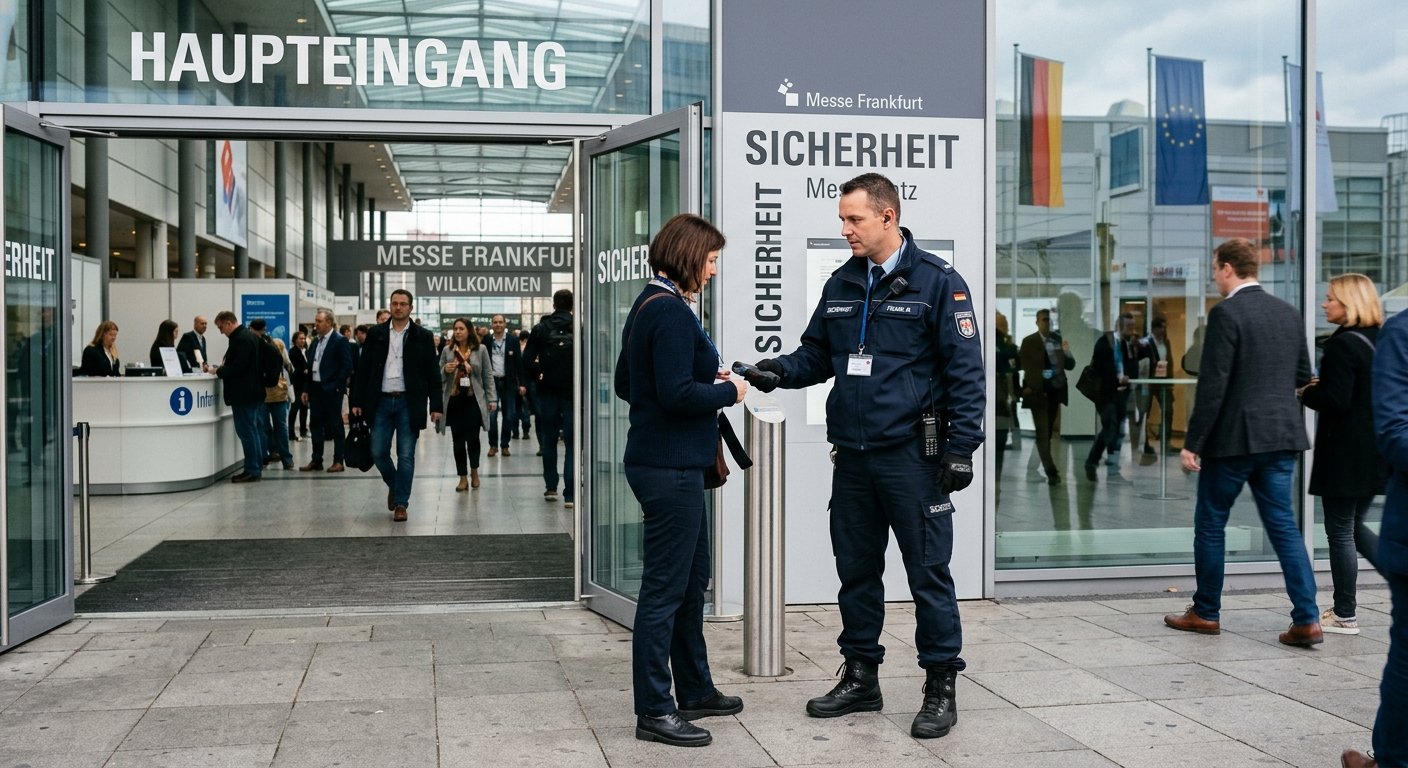
Germany’s private security sector employs more than 260,000 people, and demand keeps growing as airports, retailers, event venues, and corporate offices expand their safety teams. If you’re researching security guard jobs in Germany, this guide walks through what the work actually involves, the certification you legally need, realistic salary numbers, and how non-EU applicants can get a work visa.
This article is based on official German trade-law sources (the Gewerbeordnung), IHK examination guidelines, and current 2026 immigration rules, so you can rely on it for real planning rather than guesswork.
What Does a Security Guard Do in Germany?
Security guards (Sicherheitsmitarbeiter or Wachmann/Wachfrau) in Germany protect people, property, and premises. Day-to-day duties typically include:
- Monitoring entrances, exits, and CCTV systems
- Checking IDs and access permissions
- Patrolling buildings, construction sites, or event grounds
- Responding to alarms and minor incidents
- Writing incident reports
- De-escalating conflicts between the public and staff
The exact tasks depend heavily on the specialization, which is why “security guard” in Germany is really an umbrella term covering several distinct roles.
Types of Security Guard Jobs in Germany
Event Security (Veranstaltungsschutz)
Concerts, festivals, and sports matches hire large teams for crowd control, entrance checks, and emergency response. This is one of the most common entry points for newcomers to the industry.
Door Supervisor / Bouncer (Türsteher)
Nightclubs and bars require certified door staff. This role legally requires the §34a certificate discussed below, plus strong conflict-resolution skills.
Retail Loss Prevention (Kaufhausdetektiv)
Store detectives monitor for theft in shopping centers and supermarkets, often working in plain clothes.
Corporate and Facility Security (Objektschutz)
Office buildings, factories, and data centers hire guards for access control and site protection — often the most stable, long-term positions.
Transport and Logistics Security
Airports, train stations, and freight companies need guards trained in screening procedures and cargo security.
Requirements to Become a Security Guard in Germany
The §34a GewO Certificate (Sachkundeprüfung)
The single most important qualification is the Sachkundeprüfung nach §34a GewO, a legally mandatory exam under Germany’s Trade Regulation Act (Gewerbeordnung). Anyone who wants to guard people or property commercially for a third party must hold this certification.
The exam is administered by the IHK (Industrie- und Handelskammer) and covers:
- Trade and public safety law
- Data protection basics
- Civil and criminal law fundamentals
- Fire protection and accident prevention
- Conflict de-escalation and self-defense principles
After passing, you’re entered into the official register of licensed security personnel — employers will ask to see this certificate before hiring you for most guarding roles.
Basic Eligibility Criteria
- Minimum age of 18
- Clean police clearance certificate (Führungszeugnis)
- Physical and mental fitness for shift work
- German language ability (at least conversational; many training providers now offer courses in English, Arabic, Turkish, and Ukrainian to prepare non-native speakers)
Optional: Fachkraft für Schutz und Sicherheit
For those who want a recognized three-year vocational qualification rather than the shorter §34a course, Germany also offers the Fachkraft für Schutz und Sicherheit apprenticeship, which opens the door to supervisory and specialist roles later on.
How Much Do Security Guards Earn in Germany?
Salaries vary by city, employer, and shift pattern. Based on current industry data, here’s a realistic range:
| Experience Level | Monthly Gross Salary |
|---|---|
| Entry-level guard | €1,900 – €2,300 |
| Experienced guard (2+ years) | €2,300 – €2,800 |
| Team leader / supervisor | €2,800 – €3,400 |
| Corporate security specialist | €3,000 – €3,800 |
Night shifts, weekend work, and public holidays usually come with legally mandated pay supplements. Larger cities such as Berlin, Munich, Frankfurt, and Hamburg tend to pay more due to higher demand and cost of living.
Figures are estimates based on publicly available industry sources as of 2026 and can vary by employer, region, and collective bargaining agreement (Tarifvertrag). Always confirm exact terms in your individual contract.
Work Visa Options for Non-EU Security Guards
Non-EU citizens interested in security jobs in Germany generally use one of these two immigration routes:
Skilled Worker Visa (§18a Residence Act)
This visa is for applicants with a recognized vocational qualification (such as the Fachkraft für Schutz und Sicherheit or an equivalent foreign qualification) plus a binding job offer. Employers must confirm the role matches your qualification, and your foreign credential typically needs recognition through Germany’s Anabin database or a formal comparability statement from the ZAB.
Opportunity Card (Chancenkarte)
Introduced to help address labor shortages, the Opportunity Card lets qualified non-EU applicants enter Germany for up to 12 months to search for a job without needing an offer first. As of 2026, applicants must show proof of financial self-sufficiency (around €1,091/month) and meet a points-based system covering language skills, age, and prior work experience. Part-time work of up to 20 hours a week is allowed while job-hunting.
Because immigration rules change frequently, always verify current requirements on the official Federal Foreign Office or Make it in Germany portals before applying.
How to Apply for Security Guard Jobs in Germany
- Research the role that fits you — event, retail, corporate, or transport security each have different demands.
- Complete the §34a Sachkundeprüfung through an accredited training provider and the local IHK.
- Get your police clearance certificate and prepare your application documents.
- Secure a work visa (if applying from outside the EU) using the Skilled Worker Visa or Opportunity Card route.
- Apply directly through German job portals, security company websites, or staffing agencies specializing in the sector.
- Prepare for the interview — expect questions on conflict scenarios, reliability, and shift flexibility.
- Register with your employer once hired, and complete any onboarding or site-specific training.
Top Cities and Employers Hiring Security Guards
Demand is strongest in Germany’s major metropolitan areas — Berlin, Munich, Frankfurt, Hamburg, and Cologne — where airports, corporate headquarters, and large event venues are concentrated. Both large national security firms and smaller regional companies regularly post openings, and many also offer in-house §34a training for new hires who don’t yet have their certificate.
Career Growth in the Security Industry
The §34a certificate is only the starting point. With experience, guards can progress into:
- Team leader or shift supervisor roles
- Operations or site manager positions
- Corporate security consulting
- Specialized fields like cybersecurity-adjacent physical security or VIP protection
Further qualifications, such as the Fachkraft für Schutz und Sicherheit or management-level IHK courses, accelerate this progression.
Pros and Cons of Security Guard Jobs in Germany
Pros:
- Low barrier to entry compared to many skilled trades
- Steady demand across most German cities
- Clear certification path with defined career progression
- Training available in multiple languages
Cons:
- Entry-level pay is modest relative to Germany’s cost of living
- Shift work, including nights and weekends, is common
- The role can involve confrontational or high-stress situations
- Non-EU applicants face visa paperwork and qualification-recognition steps
Frequently Asked Questions
Do I need German language skills for security guard jobs in Germany?
Basic to conversational German is expected for most roles, since you’ll interact with the public and read local regulations. Some entry-level or event-based roles accept English speakers, especially with international staffing agencies, but stronger German significantly improves your job prospects.
How long does it take to get the §34a certificate?
Preparation courses typically run a few weeks to a few months, depending on whether you study full-time, part-time, or online. The IHK exam itself is a single scheduled session combining written and oral components.
Can I work as a security guard in Germany without EU citizenship?
Yes, through the Skilled Worker Visa (§18a) or the Opportunity Card, provided you meet the qualification-recognition and language requirements. A confirmed job offer strengthens your application considerably.
Is security guard work considered a shortage occupation in Germany?
The security industry faces ongoing staffing gaps in several regions, which is why many companies actively recruit and sponsor training for new candidates, including international applicants.
Conclusion
Security guard jobs in Germany offer a realistic, accessible entry point into the German job market, especially for candidates willing to complete the §34a Sachkundeprüfung and meet visa requirements where applicable. Salaries are modest at entry level but improve steadily with experience and specialization. If you’re serious about this path, start with accredited §34a training, gather your documentation early, and research the visa route that matches your qualifications.