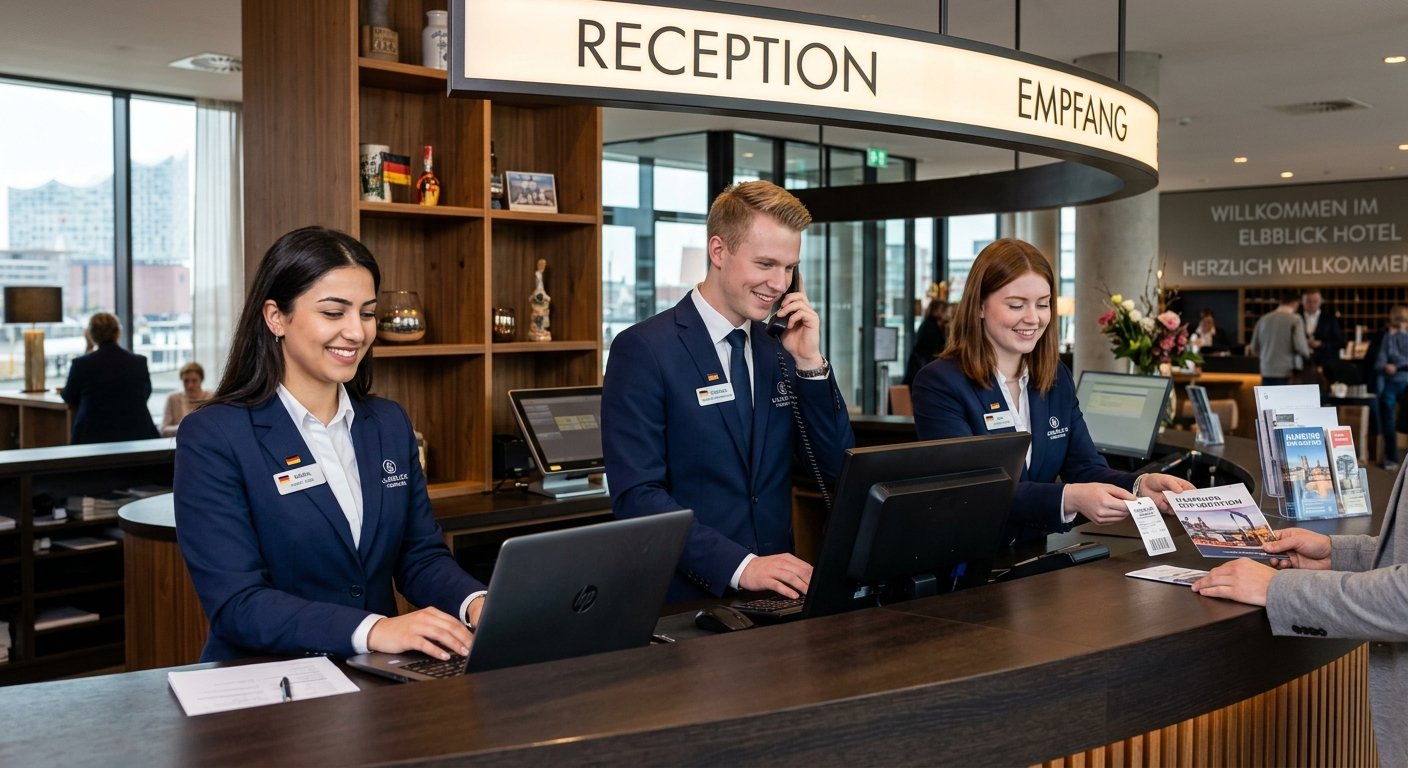
Germany’s hotel and hospitality sector is one of the most active job markets in Europe right now. An aging domestic workforce, a steady flow of business and leisure travelers, and a shortage of trained staff have pushed many hotels — from budget chains to five-star properties — to look beyond Germany’s borders for reliable employees. If you’re considering hotel jobs in Germany, this guide walks through realistic salary ranges, the actual visa pathways available in 2026, the skills employers want, and how to apply without falling for the scams that unfortunately circulate around this topic.
This guide is written for job seekers researching hospitality careers abroad and is based on publicly available German immigration rules, hospitality industry hiring trends, and standard international recruitment practices. It is not legal or immigration advice — always confirm details with the German Federal Foreign Office or a licensed immigration advisor before making decisions.
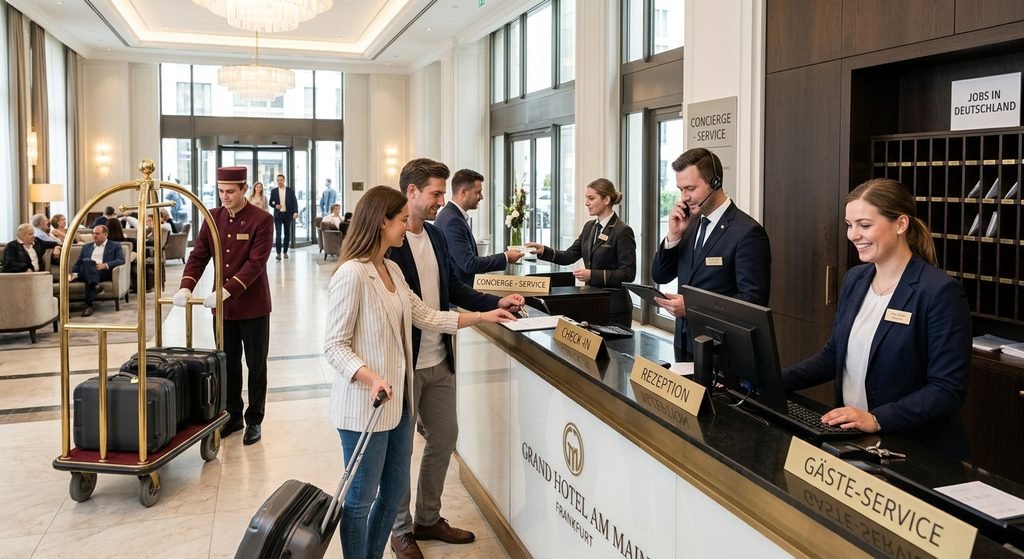
Table of Contents
- Why Germany’s Hotel Industry Is Hiring
- Types of Hotel Jobs Available in Germany
- Average Hotel Job Salaries in Germany
- Work Visa Options for Hotel Jobs in Germany
- Skills and Qualifications Employers Look For
- How to Apply for Hotel Jobs in Germany
- Best German Cities for Hotel Careers
- How to Avoid Fake Job and Visa Scams
- Pros and Cons of Working in German Hotels
- Frequently Asked Questions
Why Germany’s Hotel Industry Is Hiring
Germany is one of the most visited countries in Europe, and its hospitality association (DEHOGA) has repeatedly reported staff shortages across hotels and restaurants following the pandemic-era workforce exodus. Many properties never fully rebuilt their teams, so hotels in major cities and tourist regions continue to advertise open positions in reception, housekeeping, food and beverage, and kitchen operations. At the same time, Germany’s population is aging, which means fewer young domestic workers are entering entry-level hospitality roles. This combination has made the country genuinely open to skilled and semi-skilled foreign workers who meet its visa requirements.
Types of Hotel Jobs Available in Germany
Hotels are large operations with many departments, so opportunities exist at nearly every experience level.
Front Office and Guest Services
Roles such as hotel receptionist, front desk agent, concierge, and guest relations officer. These positions usually require good communication skills and at least basic German or strong English, since staff interact directly with guests.
Housekeeping and Laundry
Room attendants, housekeeping supervisors, and laundry staff. These are commonly listed as entry-level roles that don’t always require prior hotel experience, making them accessible for first-time applicants.
Food and Beverage / Kitchen
Chefs, cooks, kitchen porters, waiters, bartenders, and banquet staff. Skilled chefs and cooks with culinary qualifications are in particularly high demand, and larger hotel groups often sponsor these roles.
Management and Administration
Front office managers, food and beverage managers, hotel operations managers, and revenue/reservations staff. These roles typically require several years of hospitality experience and, in many cases, a hospitality management qualification.
Maintenance and Support
Roles such as hotel maintenance technician, porter, and driver, which support the daily running of larger properties and resorts.
Average Hotel Job Salaries in Germany
Pay varies by role, city, hotel category, and experience level. The figures below reflect typical ranges reported across German hospitality job listings and recruitment platforms in 2026.
| Role | Typical Monthly Salary (Gross) |
|---|---|
| Housekeeping / Room Attendant | €1,900 – €2,400 |
| Hotel Receptionist / Front Desk | €2,200 – €3,000 |
| Waiter / Waitress, Bartender | €2,000 – €2,700 |
| Cook / Chef de Partie | €2,300 – €3,200 |
| Head Chef / Executive Chef | €3,500 – €4,800 |
| Front Office / Operations Manager | €3,200 – €4,500 |
Salaries in Munich, Frankfurt, Hamburg, and Stuttgart tend to sit at the higher end of these ranges due to a higher cost of living, while smaller towns and resort areas may pay slightly less but often include accommodation or meal allowances that offset the difference. Always confirm whether a quoted salary is gross (before tax) or net (after tax), as German payroll deductions for tax, health insurance, and pension contributions are significant.
Work Visa Options for Hotel Jobs in Germany
Germany does not hand out hospitality work visas casually — you generally need either a confirmed job offer, a recognized qualification, or both. The main legal routes are:
EU Blue Card: Designed for skilled workers with a university degree and a job offer above a set salary threshold. It’s more commonly used for hotel management and specialist roles than entry-level positions.
Skilled Worker Visa (under the Skilled Immigration Act): Covers workers with vocational or professional qualifications relevant to the job, including hospitality-specific training. Many chef, receptionist, and supervisory roles fall under this category if you hold a recognized qualification or equivalent work experience.
Ausbildung (Vocational Training) Visa: Allows candidates to enter Germany to complete a recognized hospitality apprenticeship, often combined with paid on-the-job training. This is a popular route for younger applicants without formal qualifications yet.
Chancenkarte (Opportunity Card): A points-based job-seeker visa introduced to let qualified candidates enter Germany for up to a year to search for work, including hospitality roles, without needing a job offer first.
Job Seeker Visa: Similar in spirit to the Opportunity Card, aimed at qualified professionals who want to travel to Germany and interview in person before securing a contract.
Processing times vary widely depending on your home country’s German consulate, but applicants commonly report waiting six to twelve weeks from application to visa issuance. Requirements typically include a valid passport, proof of qualifications, a signed employment contract or job offer, proof of German language ability where relevant, and evidence of funds or accommodation. Because rules are updated periodically, verify current requirements directly on the German Federal Foreign Office’s official visa page before applying.
Skills and Qualifications Employers Look For
- Basic to conversational German (many hotels accept English-only staff for international properties, but German significantly widens your options)
- Prior hospitality or customer service experience, even informally
- A clean, professional CV formatted for German or international standards
- Physical stamina for housekeeping, kitchen, and food service roles
- Recognized culinary or hospitality management qualifications for skilled and supervisory positions
- Flexibility to work shifts, weekends, and holidays, which is standard in hotel operations
How to Apply for Hotel Jobs in Germany
- Build a strong CV and cover letter. Keep it factual, avoid exaggeration, and tailor it to each role. A short German-language cover letter is a strong signal to employers even if your German isn’t fluent yet.
- Search verified job boards. Legitimate listings appear on established platforms such as Indeed Germany, StepStone, Hotelcareer.de, and the hotel groups’ own career pages.
- Apply directly where possible. Large international hotel chains (Marriott, Accor, Hilton, Steigenberger, Motel One) list openings directly on their corporate career sites, which reduces the risk of dealing with unofficial recruiters.
- Attend interviews, often via video call. Be prepared to discuss your experience, language ability, and availability.
- Secure a written job offer or contract. This is required before you can apply for most work visa categories.
- Apply for your visa at the German consulate in your home country. Bring all requested documentation and be transparent about your qualifications and intentions.
- Arrange accommodation and register your address once you arrive, as this is legally required in Germany (Anmeldung).
Best German Cities for Hotel Careers
- Berlin – A large, diverse hotel market with strong demand across budget and boutique properties
- Munich – Higher wages, home to major trade fairs and business travel demand
- Frankfurt – A financial hub with heavy business-traveler hotel demand
- Hamburg – A major port city with a strong tourism and events sector
- Stuttgart and Cologne – Growing hospitality markets with steady mid-size hotel demand
How to Avoid Fake Job and Visa Scams
Because hotel jobs in Germany are heavily searched, this space attracts scam listings that promise “guaranteed visa sponsorship” or ask for upfront payment to “process” a job offer. Genuine German employers and the German government never charge job seekers a fee to sponsor a work visa. Before applying anywhere:
- Verify the hotel or agency has a real, checkable website and physical address
- Never pay money for a “guaranteed” job offer or visa
- Cross-check listings against the hotel’s own official careers page
- Be cautious of recruiters who pressure you to decide quickly or share sensitive documents early
- When in doubt, confirm visa-related claims against official German government sources rather than third-party job blogs
Pros and Cons of Working in German Hotels
Pros: Strong labor protections, structured contracts, opportunities to learn German, exposure to international hospitality standards, and a clear path toward permanent residency after several years of legal work.
Cons: Visa paperwork can be slow, German language ability is often expected for career growth beyond entry-level roles, and the cost of living in major cities can offset salary gains.
Frequently Asked Questions
Are hotel jobs in Germany open to foreign workers without experience? Yes, entry-level roles such as housekeeping and kitchen support sometimes accept candidates with little to no prior experience, though a visa category that matches your qualifications is still required.
Do I need to speak German to work in a hotel in Germany? It depends on the role. Guest-facing positions in international city hotels may accept English speakers, but basic German significantly improves your job prospects and is often required for supervisory roles.
How long does a German work visa for a hotel job take to process? Most applicants report processing times of roughly six to twelve weeks, though this varies by consulate and how complete the application is.
What is the average salary for hotel jobs in Germany? Gross monthly salaries generally range from about €1,900 for entry-level housekeeping roles to over €4,500 for experienced managers and head chefs, depending on city and hotel category.
Is it safe to apply through recruitment agencies for hotel jobs in Germany? Only work with agencies that are verifiable and never ask for upfront payment. Legitimate visa sponsorship does not require job seekers to pay processing fees.
Final Thoughts
Hotel jobs in Germany remain a realistic option for foreign workers willing to navigate the visa process carefully and, ideally, build at least basic German language skills over time. The opportunities are genuine — driven by real labor shortages rather than hype — but success depends on applying through verified employers, understanding which visa category actually fits your qualifications, and being patient with processing timelines. Start by matching your experience level to the right role category above, then move directly toward an official visa route rather than relying on third-party promises.