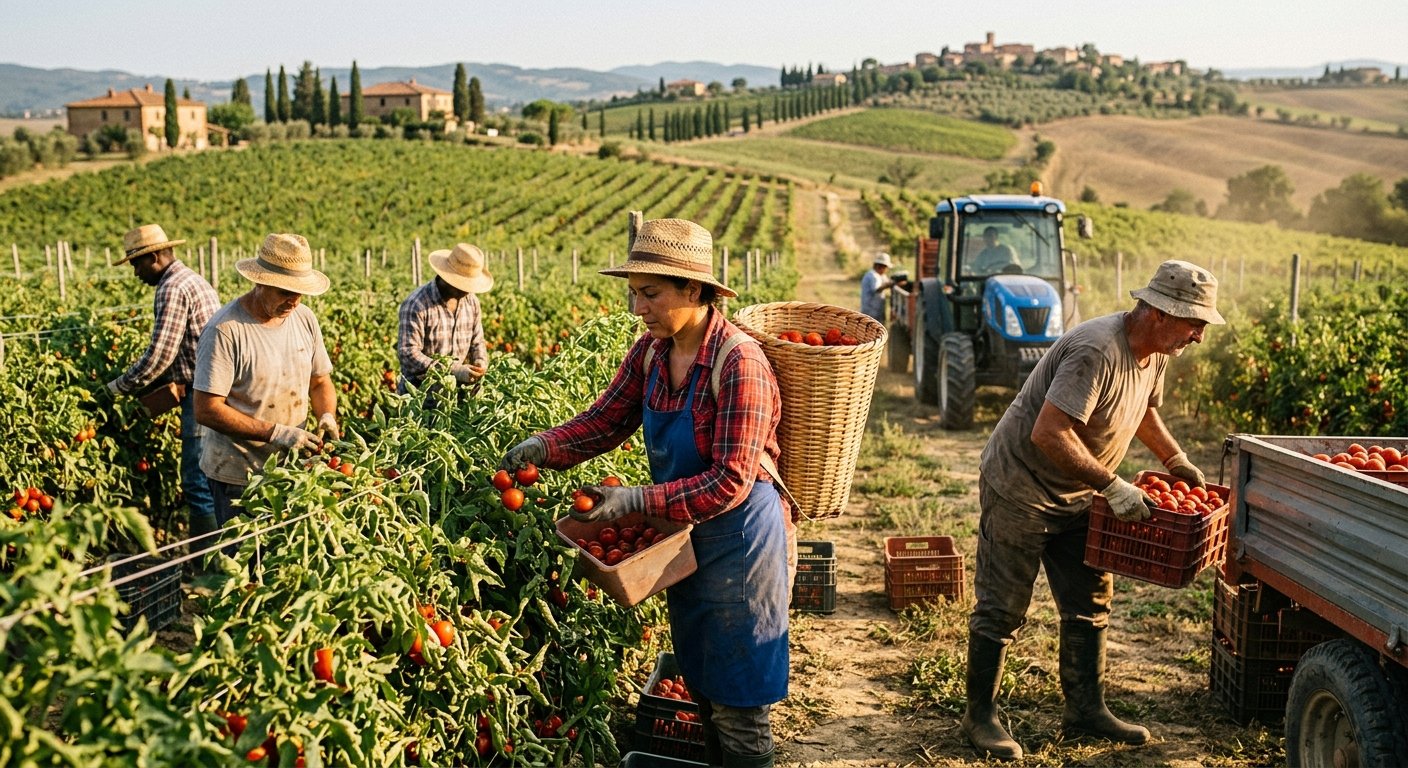
Farm Worker Jobs in Italy: An Overview
Farm worker jobs in Italy can be an option for people interested in agricultural and seasonal employment. Italy has a large agricultural sector that produces fruit, vegetables, grapes, olives and other crops, creating demand for workers during different periods of the year.
Farm work can include planting, harvesting, sorting, packing, greenhouse work, livestock support and general farm maintenance. Some positions are seasonal, while others may be available on a longer-term basis depending on the employer and type of agricultural operation.
For foreign workers, however, getting a farm job in Italy is not simply a matter of finding an employer. Non-EU nationals generally need the appropriate legal authorization and work documentation before they can work in Italy.
Italy’s 2026 immigration program includes 88,000 places for seasonal subordinate workers, with agricultural employment included in the seasonal-work system.
Important: A job advertisement does not automatically mean that a worker qualifies for an Italian work visa. Always verify employment and immigration requirements through official Italian government sources before paying anyone or making travel arrangements.
What Does a Farm Worker Do in Italy?
The duties depend on the farm, crop and season. Common responsibilities may include:
- Planting seeds and seedlings
- Harvesting fruits and vegetables
- Picking grapes and olives
- Sorting agricultural products
- Packing crops for transport
- Working in greenhouses
- Watering and caring for crops
- Removing weeds
- Cleaning agricultural areas
- Loading and unloading farm products
- Basic maintenance of tools and equipment
- Supporting livestock operations
- Following workplace health and safety instructions
Farm work can be physically demanding. Employees may spend many hours outdoors and may need to work early mornings, particularly during harvesting periods.
Types of Farm Worker Jobs in Italy
There is no single type of agricultural job. Opportunities vary according to region, season and employer.
1. Fruit Picker
Fruit-picking jobs are among the common types of seasonal agricultural work. Workers may harvest apples, oranges, peaches, strawberries and other fruit depending on the location and season.
The work usually involves repetitive physical activity and careful handling of crops to prevent damage.
2. Vegetable Farm Worker
Vegetable farms may hire workers for planting, harvesting, cleaning, sorting and packing vegetables.
Jobs can be available on farms growing tomatoes, lettuce, potatoes, onions and other crops.
3. Vineyard Worker
Italy is well known for wine production, and vineyards require workers for activities such as pruning, harvesting grapes and maintaining vines.
Some vineyard jobs are seasonal, particularly during grape-harvesting periods.
4. Olive Farm Worker
Olive-growing areas may require additional workers during harvesting periods. Duties can include collecting olives, handling equipment and moving harvested products.
5. Greenhouse Worker
Greenhouse workers help with planting, watering, harvesting and maintaining plants in controlled agricultural environments.
Greenhouse work may provide employment during periods when outdoor agricultural activity is lower.
6. Farm Packing Worker
Some agricultural businesses also need workers to sort, label and pack produce after harvesting.
These jobs may be performed in farm buildings, warehouses or packing facilities rather than directly in fields.
7. Livestock Farm Worker
Some agricultural businesses employ workers to assist with feeding animals, cleaning facilities and carrying out general livestock-related tasks.
Experience can be useful for specialized livestock positions.
Where Are Farm Worker Jobs Available in Italy?
Agricultural employment is distributed across different parts of Italy, and the type of work varies by region.
Important agricultural areas include parts of:
- Puglia
- Sicily
- Campania
- Lazio
- Emilia-Romagna
- Veneto
- Tuscany
- Piedmont
- Trentino-Alto Adige
For example, southern regions are important for several fruit, vegetable and olive-growing activities, while northern regions have significant agricultural, vineyard and fruit-production operations.
Job availability changes throughout the year, so applicants should search by region + crop + job type rather than assuming that vacancies are available everywhere.
Seasonal Farm Work in Italy
Seasonal employment is particularly important in agriculture because farms need additional workers during planting and harvesting periods.
Italy’s 2026 government immigration program provides 88,000 entries for seasonal subordinate employment. Agricultural seasonal work is included in this framework.
The Italian government reported that, after the January 2026 agricultural click day, 40,075 seasonal agricultural quotas had initially been allocated at provincial level. Additional allocations were subsequently made, including 5,389 agricultural seasonal-work quotas in April 2026.
This does not mean every applicant will receive a position or visa. Immigration quotas are subject to eligibility requirements, employer procedures and availability.
Farm Worker Jobs in Italy for Foreigners
Foreign nationals can work in Italian agriculture when they meet the applicable immigration and employment requirements.
For 2026, the Italian government identifies several countries whose citizens can be included in the seasonal-worker program, including Pakistan, Bangladesh, India, Morocco, Egypt, Albania, Algeria, Georgia, Ghana, Nepal, Sri Lanka and others listed by the government.
Being a citizen of an eligible country does not guarantee a job or visa. An applicant still needs an appropriate employer and must complete the required immigration process.
Italy Farm Worker Visa: How Does It Work?
For a non-EU worker, the process normally involves an Italian employer requesting authorization to employ the foreign worker under the applicable immigration quota and procedure.
The general process can involve:
- Finding a legitimate Italian agricultural employer.
- Receiving a genuine employment offer.
- The employer submitting the required application.
- Immigration authorities processing the request.
- Obtaining the necessary authorization.
- Applying for the appropriate visa through the Italian diplomatic authorities when required.
- Entering Italy legally.
- Completing the required residence and employment formalities.
The exact procedure can change according to nationality, employment category and current Italian immigration rules.
The official 2026 Flussi information states that applications use the Ministry of Interior’s ALI portal and that agricultural seasonal-worker applications were scheduled for the January 12, 2026 click day, with applications remaining possible through December 31, 2026 subject to quota availability.
Requirements for Farm Worker Jobs in Italy
Requirements depend on the employer and position, but applicants may commonly need:
- A valid passport
- Legal eligibility to work in Italy
- A genuine employment contract or job offer
- Required immigration authorization
- Appropriate visa or residence documentation
- Physical ability to perform agricultural duties
- Basic understanding of workplace instructions
- Previous agricultural experience for some positions
Many entry-level farm jobs may not require advanced academic qualifications.
However, experience can improve your chances of finding suitable work, especially for jobs involving machinery, livestock or specialized agricultural tasks.
Do You Need Italian Language Skills?
Italian language ability is not always required for basic farm work, but learning Italian can be very useful.
Basic Italian can help workers:
- Understand instructions
- Communicate with supervisors
- Understand safety information
- Ask questions at work
- Deal with transportation and accommodation
- Communicate with government or service providers
Before traveling, learning common workplace words and phrases can make the transition easier.
Farm Worker Salary in Italy
There is no single nationwide salary for all farm workers.
Pay can vary depending on:
- Region
- Type of farm
- Collective labor agreement
- Job duties
- Working hours
- Experience
- Seasonal or permanent status
- Overtime
- Accommodation arrangements
- Applicable deductions and contributions
Italian agricultural employment is subject to employment and social-security rules. INPS publishes specific information regarding agricultural workers and employer contributions. For 2026, INPS states that the overall contribution rate for agricultural employers employing fixed-term and permanent workers is 30.50%, with 8.84% payable by the worker under the specified framework.
Because wages can differ substantially, applicants should always ask the employer for the gross salary, expected working hours, overtime arrangements, deductions and applicable collective agreement before accepting a position.
A Simple Salary Checklist
Before accepting a farm job, ask:
- What is the gross hourly or monthly wage?
- How many hours are expected each week?
- Is overtime paid?
- How are holidays handled?
- Is accommodation provided?
- Is accommodation free or deducted from wages?
- Are meals included?
- What taxes and contributions are deducted?
- What type of employment contract will I receive?
This information is more useful than relying on a generic salary figure found online.
Working Hours and Conditions
Farm work can have different schedules depending on weather, crops and harvesting requirements.
Workers may experience:
- Early morning starts
- Longer days during peak harvest periods
- Outdoor work in hot or cold weather
- Repetitive physical tasks
- Standing or walking for extended periods
- Lifting and carrying agricultural products
Employers and workers must follow applicable Italian employment and workplace safety rules.
If a job requires equipment or machinery, workers should receive appropriate instructions and training.
Accommodation for Farm Workers
Some agricultural employers may provide accommodation, while others do not.
Never assume that accommodation is automatically included.
Before accepting a job, confirm in writing:
- Where you will live
- Whether accommodation is provided
- Whether you have to pay rent
- Whether utilities are included
- How many people share the accommodation
- How far the accommodation is from the workplace
- Whether transportation is provided
If accommodation costs are deducted from wages, ask for the exact amount before signing the employment agreement.
How to Find Farm Worker Jobs in Italy
There are several legitimate ways to search for agricultural employment.
1. Search Official Employment Services
Look for vacancies through recognized Italian employment services and public employment channels.
2. Contact Agricultural Employers
Research farms, agricultural companies, cooperatives and produce businesses and check whether they are recruiting.
3. Use Established Job Websites
Use reputable employment websites and verify the identity of the employer before providing personal information or documents.
4. Check Seasonal Recruitment
Search according to agricultural seasons. For example, searches for grape harvesting may be more useful around vineyard harvesting periods than during the winter.
5. Verify the Employer
Before accepting an overseas job, check:
- Company name
- Physical address
- Business contact details
- Employment contract
- Job duties
- Salary
- Working hours
- Accommodation terms
- Immigration procedure
How to Apply for Farm Worker Jobs in Italy
A simple application process can look like this:
Step 1: Prepare Your CV
Create a short CV showing:
- Full name
- Contact information
- Work experience
- Agricultural experience
- Skills
- Languages
- Driving or machinery experience, if applicable
Step 2: Highlight Relevant Experience
If you have worked with crops, harvesting, livestock, greenhouses, tractors or agricultural machinery, clearly mention it.
Step 3: Apply to Genuine Vacancies
Send your CV through a verified employer or reputable recruitment channel.
Step 4: Ask for Written Job Details
Before accepting an offer, request written information about the job, salary, hours and accommodation.
Step 5: Verify Immigration Requirements
If you are outside the European Union, verify the applicable work authorization and visa procedure using official Italian sources.
Step 6: Avoid Unverified Agents
Do not assume that an agent is legitimate simply because they claim to have connections with an Italian farm.
Documents You May Need
Depending on your circumstances, the process may require documents such as:
- Passport
- Employment documentation
- Work authorization
- Visa application documents
- Passport photographs
- Proof of relevant information requested by authorities
- Residence-related documents after arrival
Requirements can change, so applicants should check the latest instructions from the Italian government and the Italian embassy or consulate responsible for their country.
Beware of Farm Job Scams
International job seekers are frequently targeted by fake employment offers.
Be especially careful if someone:
- Guarantees a visa
- Guarantees a job without an interview
- Demands a large upfront payment
- Refuses to provide an employment contract
- Uses only social media messaging
- Claims that immigration rules can be bypassed
- Asks you to send money to a personal account
- Promises an unusually high salary for simple farm work
A legitimate employer should be able to provide identifiable company information and appropriate employment documentation.
Never Pay for a “Guaranteed Visa”
No private person can legitimately guarantee that Italian immigration authorities will approve your visa.
Always verify important immigration information through official Italian government or diplomatic sources.
Farm Worker Jobs in Italy: Advantages and Challenges
Potential Advantages
- Opportunity to gain international work experience
- Seasonal employment opportunities
- Agricultural experience can be useful for future jobs
- Some positions may include accommodation
- Entry-level positions may have limited formal education requirements
Potential Challenges
- Physically demanding work
- Seasonal income
- Weather-dependent working conditions
- Rural locations
- Language barriers
- Accommodation may not always be provided
- Immigration procedures can take time
Understanding both the benefits and challenges can help applicants make a more informed decision.
Are Farm Worker Jobs in Italy Available Without Experience?
Some entry-level agricultural jobs may accept workers without previous professional farm experience.
However, employers may still prefer candidates who demonstrate:
- Physical fitness
- Reliability
- Willingness to work outdoors
- Ability to follow instructions
- Basic teamwork skills
- Previous farm or manual-work experience
If you have no agricultural experience, consider gaining practical experience locally before applying for overseas farm positions.
Can Pakistani Workers Apply for Farm Jobs in Italy?
Yes, Pakistani citizens are among the nationalities identified in Italy’s 2026 seasonal-worker framework. The Italian government specifically includes Pakistan in the list of countries whose citizens can be admitted under the relevant program.
However, eligibility does not mean automatic approval.
A Pakistani applicant still needs to meet the applicable requirements and generally needs a legitimate Italian employer to follow the required employment and immigration procedure.
Applicants should verify the current process through the Italian Embassy or relevant Italian government authorities rather than relying only on agents or social media posts.
Frequently Asked Questions About Farm Worker Jobs in Italy
What are farm worker jobs in Italy?
Farm worker jobs in Italy include harvesting, planting, fruit picking, vineyard work, olive harvesting, greenhouse work, crop maintenance, sorting and agricultural packing.
Are farm jobs in Italy seasonal?
Many agricultural jobs are seasonal because farms need additional workers during planting and harvesting periods. Italy’s immigration system also provides a specific route for seasonal subordinate employment.
Can foreigners work on farms in Italy?
Yes, foreign workers can work legally in Italy when they meet the applicable immigration and employment requirements.
Does Italy offer seasonal farm work visas?
Italy has a seasonal subordinate-work immigration system. For 2026, the government authorized 88,000 seasonal entries overall, including agricultural employment.
Do I need agricultural experience?
Not necessarily. Some entry-level jobs may provide on-the-job instructions, although previous agricultural or physical-work experience can be helpful.
Do farm workers need to speak Italian?
Not every entry-level position requires fluent Italian, but basic Italian can make communication and daily life significantly easier.
Does every farm job provide accommodation?
No. Accommodation depends on the employer. Always confirm accommodation terms before accepting an offer.
How much do farm workers earn in Italy?
There is no universal farm-worker salary. Pay depends on the region, job, contract, collective agreement, hours and employer. Applicants should obtain the exact wage and conditions in writing.
Can I get an Italian farm job without paying an agent?
You can search for employers and vacancies through legitimate employment channels without relying on an agent. Be particularly cautious about anyone demanding large payments in exchange for a guaranteed job or visa.
Is a farm worker job guaranteed after applying?
No. Job vacancies, employer decisions, immigration quotas and visa approvals are separate matters. No legitimate source should guarantee employment or visa approval.
Final Thoughts on Farm Worker Jobs in Italy
Farm worker jobs in Italy can provide opportunities for people interested in agriculture, seasonal employment and international work experience. Italy’s agricultural sector employs a large workforce, and official 2026 immigration planning includes substantial seasonal-worker quotas.
However, applicants should approach overseas employment carefully. A genuine job should have a real employer, clear employment conditions and a lawful immigration process.
Before traveling, verify the employer, contract, salary, accommodation and visa requirements. Most importantly, never pay someone simply because they promise a guaranteed Italian job or visa.
For the latest immigration information, use official Italian government sources and the Italian diplomatic mission serving your country.
Official Sources and Useful Resources
For reliable information, check:
- Italian government information on the 2026 Flussi immigration program
- Italian Ministry of Labor information
- Italian Ministry of Interior immigration services
- INPS information for agricultural workers and employers
- Italian Embassy or Consulate in your country
Government rules and available quotas can change, so always check the latest official information before making financial or travel decisions.