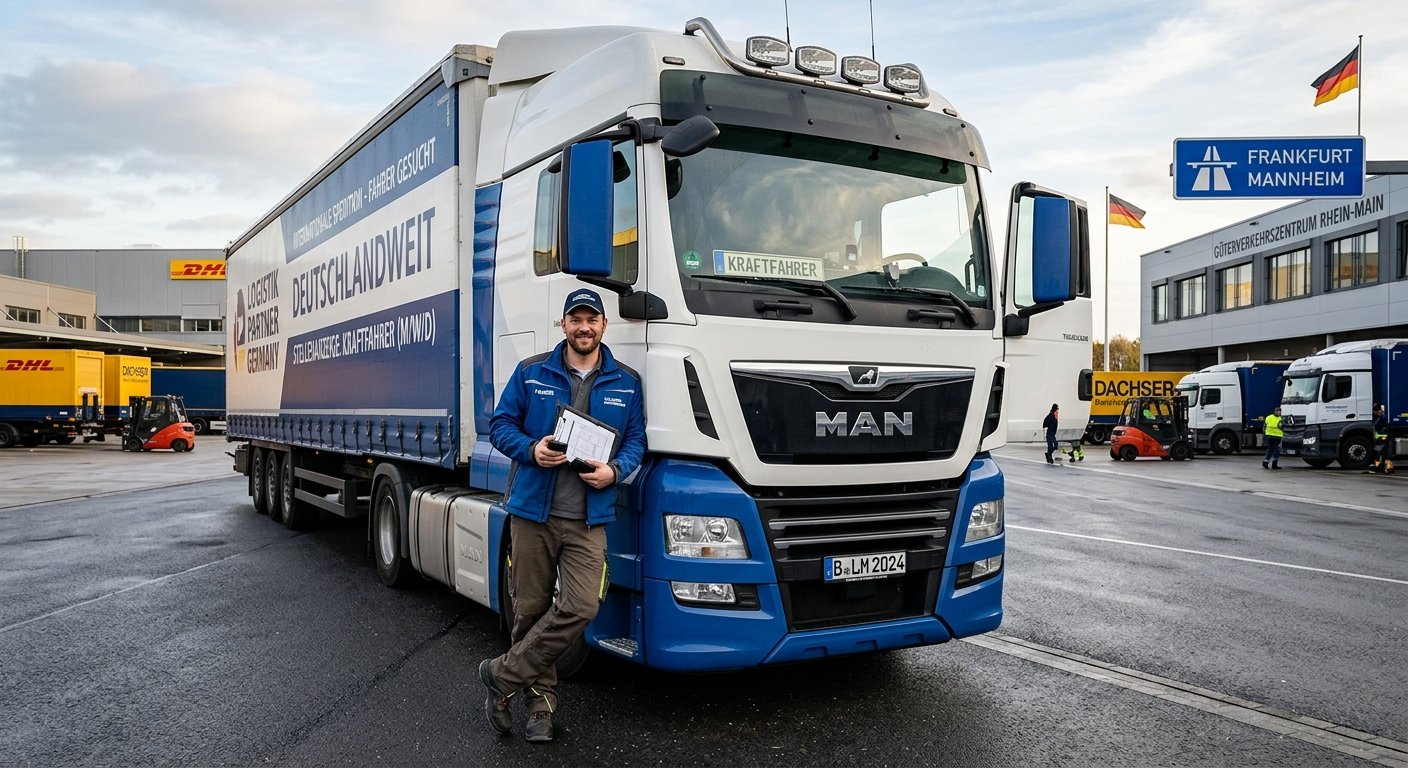
Germany’s transport and logistics sector is short of more than 60,000 qualified drivers, and that gap is only getting bigger as experienced drivers retire faster than new ones are trained. For anyone considering driver jobs in Germany, that shortage translates into real opportunity: steady demand, competitive pay, and — for many roles — a genuine path to a long-term visa and residency.
This guide breaks down what driver jobs in Germany actually pay in 2026, which licenses and documents you need, how the visa process works for non-EU applicants, and where to find verified openings. It’s written for both job seekers already in the EU and international candidates applying from abroad.
Disclosure: This article is for general informational purposes only and does not constitute legal or immigration advice. Visa and licensing rules can change, so always confirm current requirements with the German Federal Employment Agency (Bundesagentur für Arbeit) or your nearest German embassy before making decisions.
Table of Contents
- Why Driver Jobs in Germany Are in High Demand
- Types of Driver Jobs Available in Germany
- Driver Salaries in Germany (2026 Figures)
- Licenses and Qualifications You Need
- Visa Options for Foreign Drivers
- How to Apply for Driver Jobs in Germany
- Common Mistakes to Avoid
- Frequently Asked Questions
Why Driver Jobs in Germany Are in High Demand
Germany runs on road freight. Around three-quarters of domestic cargo moves by truck, and the country’s position at the center of Europe’s autobahn network makes it a hub for international logistics companies. At the same time, the average age of a German truck driver is well over 45, and thousands are retiring every year without enough younger drivers to replace them.
The BGL (Bundesverband Güterkraftverkehr Logistik und Entsorgung), Germany’s main road transport association, has flagged the shortage as a structural problem rather than a temporary one. That’s why logistics companies, supermarket chains, delivery services, and construction firms are actively recruiting — including from outside the EU.
For job seekers, this means:
- More openings than qualified applicants in most regions
- Employers offering visa sponsorship and relocation support
- Pay that has risen steadily as companies compete for drivers
- Realistic pathways from a work visa to permanent residency
Types of Driver Jobs Available in Germany
“Driver jobs in Germany” covers a wider range of roles than most people expect. The main categories include:
1. Heavy goods vehicle (HGV/truck) drivers — the largest category, covering local delivery (Nahverkehr) and long-distance international freight (Fernverkehr).
2. Bus and coach drivers — public transport companies and tour operators regularly hire licensed bus drivers, often with structured working hours.
3. Delivery and courier drivers — parcel and last-mile delivery for companies like postal and e-commerce logistics providers, usually requiring only a standard car license.
4. Taxi and private-hire drivers — city-based roles with flexible schedules, popular in Berlin, Munich, Hamburg, and Frankfurt.
5. Specialized transport drivers — tanker (ADR-certified), refrigerated, or oversized-load transport, which typically pay above standard rates due to the extra certification required.
Driver Salaries in Germany (2026 Figures)
Pay for driver jobs in Germany varies by vehicle type, region, experience, and whether the employer follows a collective wage agreement (Tarifvertrag). Based on recent recruitment platform data, here’s a realistic picture for 2026:
| Driver Role | Typical Monthly Gross Salary |
|---|---|
| Entry-level truck driver (national routes) | €2,400 – €3,200 |
| Experienced truck driver (national) | €3,200 – €4,000 |
| International/long-haul (CE + ADR) | €4,000 – €4,600+ |
| Bus/coach driver | €2,800 – €3,600 |
| Delivery/courier driver | €2,200 – €2,800 |
| Taxi driver (base + commission) | Varies widely by city and hours |
Regional differences are significant. Drivers in Bavaria and Baden-Württemberg tend to earn the most, while pay in some eastern federal states runs several thousand euros lower per year. On top of base salary, many employers add tax-free daily allowances (Spesen), night shift premiums (Nachtzuschlag), holiday pay (Urlaubsgeld), and a Christmas bonus (Weihnachtsgeld) — all of which meaningfully boost real take-home pay.
Germany’s national minimum wage rose to €13.90 per hour gross from January 2026, which sets a floor even for entry-level driving roles.
Licenses and Qualifications You Need
Requirements depend on the type of driver job, but most professional driving roles in Germany require:
- A valid EU/EEA driving license in the relevant category (C or CE for trucks, D for buses). Non-EU license holders generally need to convert their license or pass a German driving test, depending on their country of origin and any bilateral agreements.
- Driver CPC / Code 95 qualification — a mandatory professional competence certificate for anyone driving trucks or buses for hire or reward in the EU. It must be renewed periodically through continuing training.
- A digital tachograph card, used to record driving and rest hours in compliance with EU regulations.
- ADR certification (optional but valuable) for drivers who want to transport hazardous materials, which typically comes with higher pay.
- Basic German language skills — not always mandatory, especially in international logistics roles, but even conversational German significantly widens the range of jobs available and often improves pay offers.
Visa Options for Foreign Drivers
Non-EU citizens applying for driver jobs in Germany typically go through one of these routes:
1. EU Blue Card or Skilled Worker Visa — available once you have a concrete job offer and your qualifications are recognized as equivalent to German standards.
2. Opportunity Card (Chancenkarte) — a points-based visa that allows qualified applicants to enter Germany and search for a job in person, useful if you don’t yet have an offer lined up.
3. Employer-sponsored work permits — many logistics companies facing driver shortages will directly sponsor the visa and relocation costs for candidates who meet licensing requirements, since the Federal Employment Agency prioritizes approval where a genuine labor shortage exists.
Processing times generally range from a few weeks to a few months depending on your country of application and how complete your documentation is. Because rules and quotas can change, always check the latest requirements on the official Make it in Germany portal or with a licensed immigration advisor before applying.
How to Apply for Driver Jobs in Germany
- Confirm your license category and check whether it needs conversion or a German equivalency test.
- Get Code 95 / Driver CPC certified if you don’t already hold it — this is non-negotiable for most professional roles.
- Build a German-style CV (Lebenslauf) with a photo, clear work history, and license details listed prominently.
- Search verified sources: the Bundesagentur für Arbeit job board (arbeitsagentur.de), EURES for EU-wide postings, and established logistics recruiters who specialize in placing foreign drivers.
- Apply directly to companies with visa sponsorship experience — larger logistics and retail chains are generally more equipped to handle the paperwork than small local firms.
- Prepare for a possible interview or trial drive, and have your documents (license, CPC card, references, language certificates if any) translated and ready.
- Once offered a role, work with your employer or an immigration advisor to submit your visa application promptly, since processing can take several weeks.
Common Mistakes to Avoid
- Paying upfront fees to “recruitment agencies” promising guaranteed jobs — legitimate employers and licensed agencies do not charge job seekers placement fees.
- Assuming any license works — always verify whether your home country’s license needs conversion before accepting an offer.
- Ignoring the Tarifvertrag — jobs covered by a collective agreement usually offer better pay and protections than off-scale offers.
- Ranking pay above total package — a slightly lower base salary with strong Spesen, bonuses, and benefits can outperform a higher headline number elsewhere.
Frequently Asked Questions
Can foreigners get driver jobs in Germany without speaking German? Yes, particularly in international logistics and long-haul trucking, where English is often sufficient. However, basic German improves your job options and earning potential considerably.
What is the average salary for driver jobs in Germany in 2026? Most truck drivers earn between €2,400 and €4,600 gross per month depending on experience, route type, and region, with specialized or long-haul roles at the higher end.
Do I need a CE license for truck driver jobs in Germany? Yes, a category CE license is required to legally drive a truck with a trailer over 7.5 tonnes, along with a valid Driver CPC (Code 95) qualification.
How long does it take to get a German work visa for driver jobs? Processing times vary but typically range from four to twelve weeks, depending on the visa type, your home country, and how complete your application is.
Is Germany actively recruiting foreign truck drivers? Yes. Due to a persistent shortage exceeding 60,000 positions, many German logistics companies sponsor visas and support relocation for qualified international drivers.