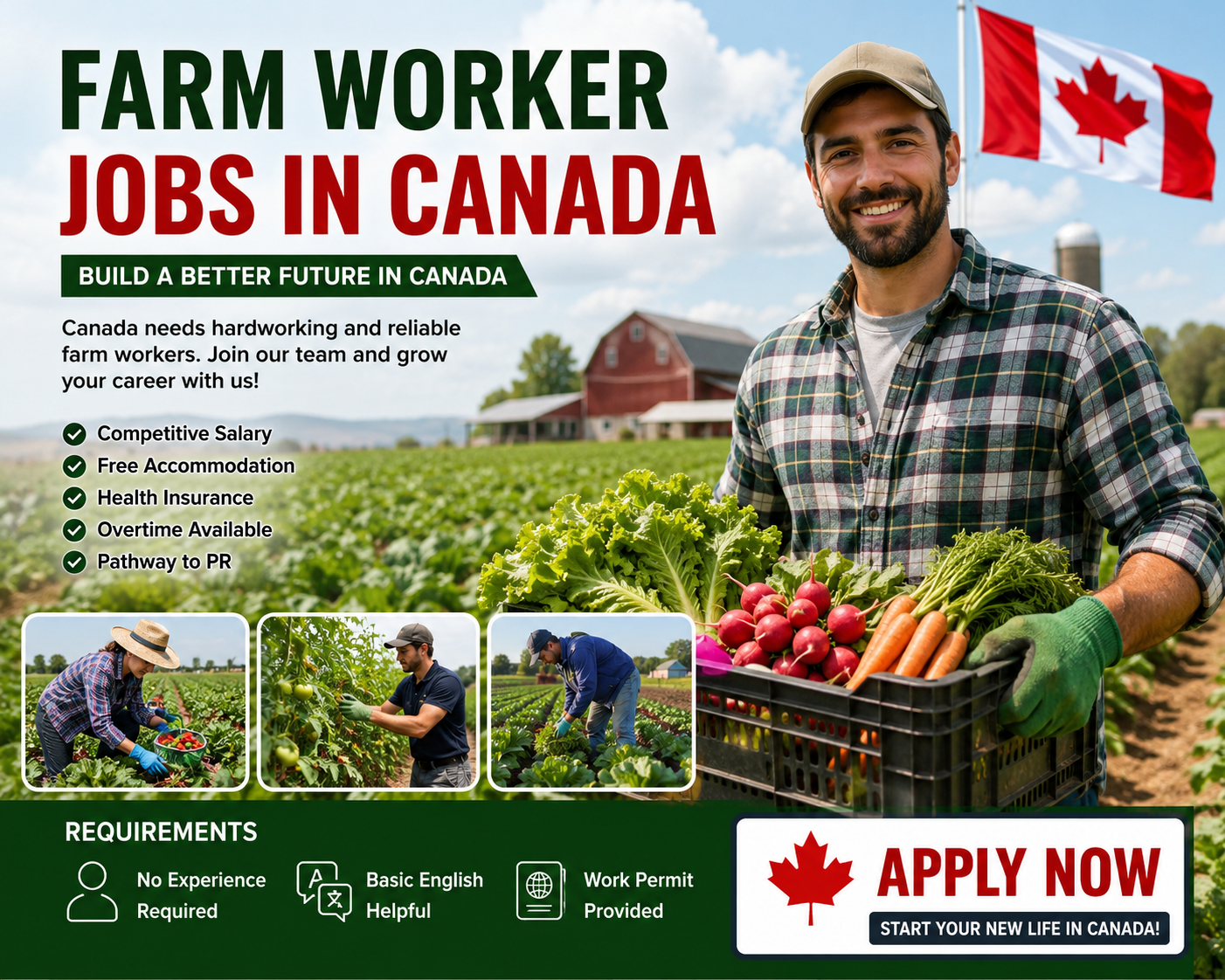
Canada’s agriculture sector has a persistent labour shortage, and farm worker jobs in Canada remain some of the most accessible entry points for people who want to work legally in the country — whether you’re a Canadian resident looking for seasonal income or a foreign national exploring a work permit route. This guide breaks down real wages, the main legal pathways (including the Seasonal Agricultural Worker Program), what the job actually involves day to day, and how to avoid the recruitment scams that target this exact search term.
This article is written for informational purposes and reflects publicly available government and labour-market data current as of August 2026. It is not immigration or legal advice — always confirm details on the official Government of Canada website before applying or paying anyone for a job offer.
Table of Contents
- What Does a Farm Worker Job in Canada Involve?
- How Much Do Farm Workers Earn in Canada?
- Who Can Apply for Farm Worker Jobs in Canada?
- The Seasonal Agricultural Worker Program (SAWP) Explained
- Other Legal Pathways for Foreign Farm Workers
- Step-by-Step: How to Apply for a Farm Worker Job in Canada
- Skills and Requirements Employers Look For
- Where in Canada Farm Jobs Are Most Available
- Life on the Job: Housing, Hours, and Worker Rights
- Common Scams to Avoid
- Can Farm Work Lead to Permanent Residency?
- Frequently Asked Questions
What Does a Farm Worker Job in Canada Involve?
General farm worker roles cover a wide range of hands-on agricultural tasks. Depending on the operation, a typical day might include:
- Planting, weeding, and harvesting fruits, vegetables, or grain
- Operating and maintaining farm machinery
- Feeding livestock, milking, and cleaning barns or pens
- Packing and grading produce for shipment
- Greenhouse work, including irrigation and pest control
- General maintenance of farm buildings and equipment
The work is physically demanding and often seasonal, with peak hiring from spring through fall for crop farms, while livestock and greenhouse operations may hire year-round.
How Much Do Farm Workers Earn in Canada?
Wages vary by province, employer, and role, but here’s what current labour-market data shows for 2026:
| Source | Average Hourly Wage (CAD) |
|---|---|
| Government of Canada Job Bank (general farm worker – livestock) | $15.00–$28.00/hour |
| Indeed Canada | ~$20.87/hour |
| Talent.com | ~$25.88/hour |
| PayScale (crop field workers) | ~$18.00/hour |
People working as a general farm worker in Canada usually earn between $15.00 and $28.00 per hour, according to Government of Canada Job Bank wage data. Pay depends heavily on province (British Columbia and Ontario tend to pay more than some other regions), experience, whether the role is unionized, and whether it’s a specialized position like a farm supervisor. Most farms pay at least the provincial minimum wage, and overtime is typically calculated at 1.5 times the base rate after a set number of weekly hours. Many employers under government-regulated programs also provide free or subsidized housing, which effectively increases take-home value even when the hourly rate looks modest.
Who Can Apply for Farm Worker Jobs in Canada?
Two broad groups apply for these roles:
- Canadian citizens and permanent residents can apply directly to farm job postings the same way they would for any other job — through Job Bank, provincial job boards, or directly with farm employers.
- Foreign nationals generally need a valid Canadian work permit before starting work. The two main legal routes are the Seasonal Agricultural Worker Program (SAWP) and the Temporary Foreign Worker Program (TFWP) Agricultural Stream, both of which require a Canadian employer to have an approved Labour Market Impact Assessment (LMIA) before a worker can apply.
There is no legitimate way to “buy” a farm job offer or guaranteed visa. If anyone asks for payment in exchange for a job offer letter, that is almost always a scam (more on this below).
The Seasonal Agricultural Worker Program (SAWP) Explained
SAWP is a bilateral agreement between Canada and participating countries — Mexico, Jamaica, Trinidad and Tobago, Barbados, and the countries of the Organisation of Eastern Caribbean States — that has operated since 1966, making it one of the longest-running temporary foreign worker programs in the world. Here’s how it works:
- Workers are recruited through their home country’s government, not directly by Canadian employers, which adds a layer of protection against fraudulent recruiters.
- Contracts typically run for around eight months, generally between January and December, matching the Canadian growing season.
- Workers hired through SAWP can work for any approved SAWP employer in Canada and, in some cases, for more than one employer without needing a new work permit.
- Canadian employers must sign a standardized employment contract with each worker before their first day of work, covering wages, hours, housing, and other conditions. 2026 updates to this contract clarified employer responsibilities around accommodations, added rules requiring exterior locking doors on worker housing, and increased the weekly laundry allowance employers must provide.
- As of January 1, 2026, employers hiring for primary agriculture positions must again provide proof of advertisement when applying for an LMIA, and are required to make genuine efforts to hire Canadians and permanent residents — including underrepresented groups such as youth, Indigenous peoples, newcomers, and persons with disabilities — before turning to the TFWP.
Important: Because recruitment runs through your home government’s labour or employment ministry, the correct first step for most applicants is to contact that ministry’s SAWP office rather than searching for “recruiters” online.
Other Legal Pathways for Foreign Farm Workers
If you don’t qualify for SAWP (which is limited to specific partner countries), other routes include:
- TFWP Agricultural Stream – for a broader range of source countries and farm occupations, also requiring an LMIA-approved employer.
- Agri-Food Immigration Pilot – a federal pilot aimed at helping workers in agriculture and food processing obtain permanent residency, open to occupations like general farm workers, farm supervisors, butchers, and food processing workers, and requiring at least 12 months of full-time non-seasonal Canadian experience plus CLB 4 language scores and a valid job offer.
- Provincial Nominee Programs (PNPs) – several provinces run PNP streams that specifically target agricultural or agri-food workers, which can offer a route to permanent residency after gaining Canadian work experience.
Step-by-Step: How to Apply for a Farm Worker Job in Canada
- Check your eligibility – Confirm your country is a SAWP partner, or research whether the TFWP Agricultural Stream applies to you.
- Search official job listings – Use the Government of Canada Job Bank and your home country’s official labour recruitment office (for SAWP).
- Confirm the employer is LMIA-approved – A legitimate Canadian farm employer will have gone through this government process; ask to see it referenced in your offer.
- Review the employment contract carefully – It should specify wages, hours, housing, and deductions, matching the standardized government contract.
- Apply for your work permit – Submit your application through Immigration, Refugees and Citizenship Canada (IRCC) once you have a valid job offer.
- Prepare for arrival – Arrange required medical exams, travel documents, and understand your rights as a temporary worker before you land.
Skills and Requirements Employers Look For
Most general farm worker positions don’t require formal education, but employers typically look for:
- Physical stamina for repetitive, outdoor labour
- Basic English or French communication skills
- Willingness to work long hours during harvest season
- Prior farm or manual labour experience (an asset, not always required)
- A valid work permit or legal status to work in Canada
- A clean record for roles involving machinery operation
Where in Canada Farm Jobs Are Most Available
Agricultural hiring is concentrated in a handful of provinces:
- Ontario – Greenhouses, fruit orchards, and vegetable farms, especially in the Niagara region and southwestern Ontario
- British Columbia – Fruit orchards, vineyards, and berry farms in the Okanagan and Fraser Valley
- Quebec – Vegetable, dairy, and fruit operations
- Alberta and Manitoba – Grain, livestock, and mixed farming operations
Life on the Job: Housing, Hours, and Worker Rights
Under SAWP and most TFWP agricultural contracts, employers are legally required to provide:
- Housing that meets provincial safety and inspection standards
- A minimum number of guaranteed work hours or pay
- Workplace safety equipment and training
- Access to provincial health coverage or equivalent insurance
- The right to file a complaint without fear of retaliation
Hours are often long during peak season, and overtime rules vary by province, so it’s worth reviewing your specific province’s labour standards before you start.
Common Scams to Avoid
Because “farm worker jobs in Canada” is a heavily searched term, it also attracts fraudulent recruiters. Red flags include:
- Anyone asking for money upfront for a “guaranteed” job offer or visa
- Job offers that arrive without any government-linked LMIA reference
- Pressure to sign contracts in a language you don’t fully understand
- Requests to send your passport or personal documents before any formal process begins
- Contact only through WhatsApp or social media with no verifiable company presence
Legitimate SAWP recruitment goes through your home country’s official labour ministry, and legitimate TFWP employers will never ask a candidate to pay a recruitment fee in Canada.
Can Farm Work Lead to Permanent Residency?
SAWP itself does not directly lead to permanent residency, but it can be a stepping stone. Workers who gain sufficient non-seasonal Canadian experience may qualify for pathways like the Agri-Food Immigration Pilot or a provincial nominee stream, both of which can lead to permanent status over time. These programs have specific work-experience, language, and job-offer requirements, so it’s worth researching the criteria early if long-term immigration is your goal.
Frequently Asked Questions
Do I need experience to get a farm worker job in Canada? Not always. Many general farm labour roles are entry-level, though experience with machinery, livestock, or specific crops can help you qualify for better-paying positions.
How much do farm workers make per hour in Canada? Government wage data shows a typical range of roughly $15–$28 per hour depending on province, role, and employer, with several private salary sites reporting national averages between about $18 and $26 per hour.
Is SAWP only for certain countries? Yes. SAWP partners with Mexico, Jamaica, Trinidad and Tobago, Barbados, and the OECS Caribbean countries. Workers from other countries typically apply through the TFWP Agricultural Stream instead.
Can farm workers bring their families to Canada? This depends on the specific work permit program and its conditions; family accompaniment rules vary and should be confirmed directly through IRCC.
Where do I find official farm job listings? Start with the Government of Canada’s Job Bank and, for SAWP specifically, your home country’s official labour or employment ministry — not third-party recruiters found through social media.
Disclaimer: This article is for general informational purposes only and does not constitute immigration, legal, or financial advice. Program rules, wages, and eligibility criteria change over time — always verify current requirements on the official Government of Canada website (canada.ca) or consult a licensed immigration professional before making any decisions or payments.
Sources: Government of Canada – Employment and Social Development Canada (SAWP program pages), Immigration, Refugees and Citizenship Canada (IRCC), Government of Canada Job Bank wage reports.